Practical info
Is Airbnb Legal in Tenerife? How to Book a Licensed Rental
Yes, renting a holiday home in Tenerife through Airbnb or any other channel is legal, as long as the home is registered as a vivienda vacacional with the Canary Islands Government and shows its registration number in every advert. This guide explains what that number looks like, how to check it…
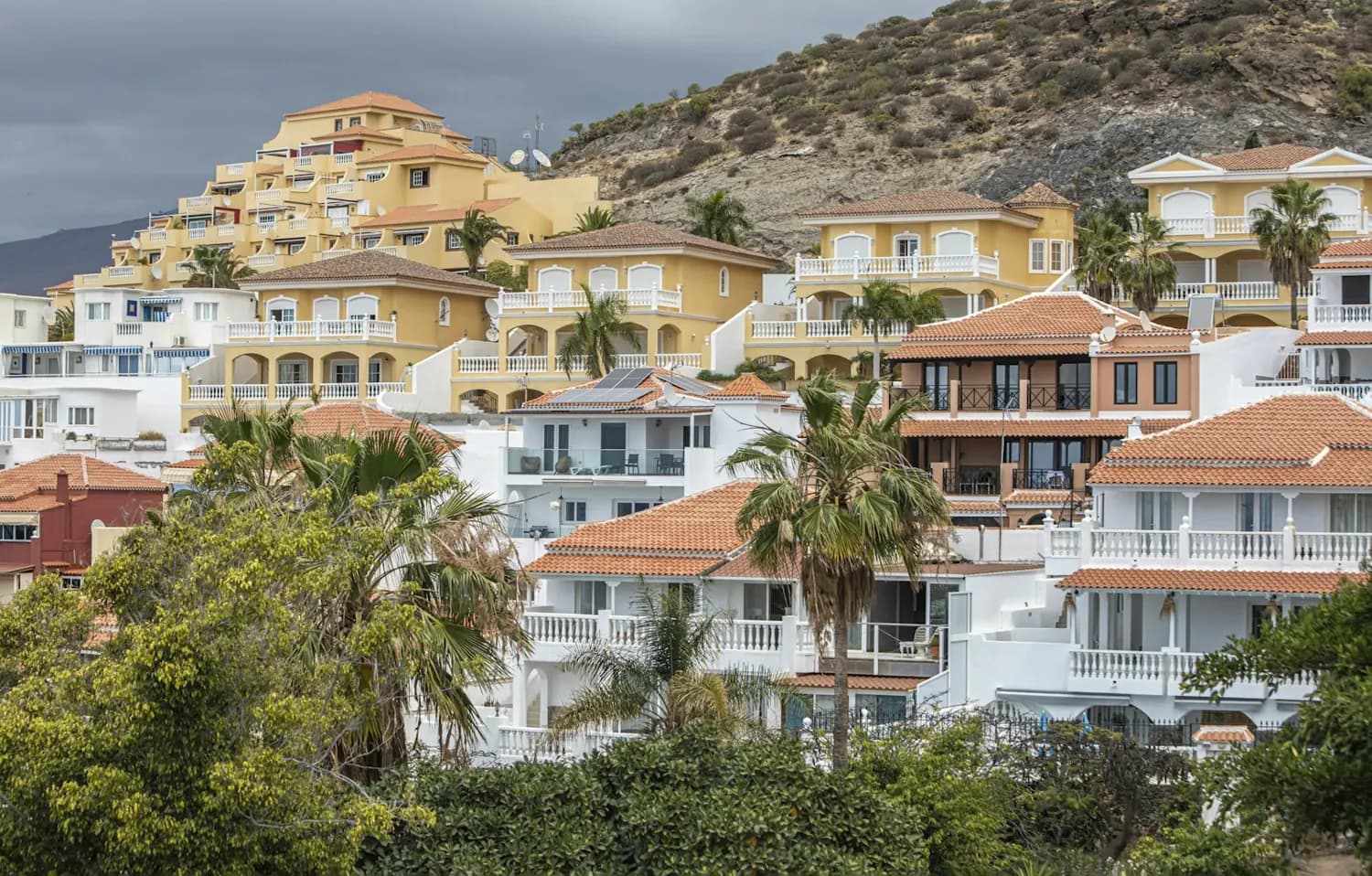
Is Airbnb legal in Tenerife?
Airbnb-style holiday lets are legal in Tenerife when the property is entered in the Registro General Turístico de Canarias (the Canary Islands' tourism register) as a vivienda vacacional, often shortened to "VV". The owner or the managing company files a sworn declaration (declaración responsable) with the Canary Government and receives a registration document and number.
The current framework is Canary Law 6/2025 of 10 December 2025 on the sustainable tourist use of housing, published in Spain's official gazette as BOE-A-2025-26358. It ties advertising to registration: the number exists so that only authorised homes are offered, and platforms must be able to check it. Legal guides report fines of up to €300,000 for the most serious cases of operating without registration.
Two further points often confuse guests:
- The national NRUA number is no longer required. Spain's Supreme Court annulled the core of the national short-term rental register (Royal Decree 1312/2024) in judgment 620/2026 of 19 May 2026. The court said the regional registers, including the Canary one, are not affected.
- EU rules now back the local number. Since 20 May 2026, EU Regulation 2024/1028 requires online platforms to collect and display registration numbers for short-term rentals.
So the number that matters for you in Tenerife is the Canary VV registration number.
What does a Tenerife licence number look like?

A Tenerife holiday-let number starts with "VV", and most you will see are written as VV-38-4- followed by a string of digits. "VV" stands for vivienda vacacional, and 38 is the code of the province of Santa Cruz de Tenerife.
You should find it in three places:
| Where | What to look for |
|---|---|
| The advert (platform, agency or company website) | The full VV number, usually in the description or a registration line |
| Your booking confirmation or the property page | The same number, identical digit for digit |
| The entrance of the home | A plaque (placa-distintivo) showing the number, unless the building's community of owners has prohibited it |
A number that changes between the advert and the confirmation, or a host who "will send it later", is a reason to stop and ask questions before paying.
How do I check a licence number myself?
You can check a Tenerife holiday let against the Canary Government's own list, which is published as free open data on datos.canarias.es. The dataset is called Establecimientos extrahoteleros de tipología vivienda vacacional inscritos en el Registro General Turístico de Canarias, and it was last updated on 27 September 2026 when we checked.
Step by step:
- Copy the VV number and the area from the listing (municipality, for example Adeje or Arona, and the street or complex name if shown).
- Open the dataset page on datos.canarias.es and download the CSV or XLSX file. It is a large file, so a spreadsheet program works better than a phone.
- Filter by island (Tenerife) and municipality, then look for the complex, street or postcode.
- Compare the details. The list includes the address, locality, postcode, number of single and double bedrooms, total bed places (plazas) and map coordinates. A listing that promises four bedrooms and ten guests should not match a registered one-bedroom flat for two.
- If you cannot find it, ask. Addresses in the file are sometimes incomplete (the code "_U" marks missing data), so ask the host for the registered address and the registration document. A genuine owner or manager can send it without hesitation.
We could not confirm that the dataset prints the registration number in exactly the same format as adverts do, which is why matching the address and capacity matters as much as the number itself.
Booking direct vs platforms: what do you pay?
On a platform you usually pay for the platform's service somewhere in the price: either as a separate guest fee at checkout, or built into a higher nightly rate because the host pays the commission. When you book direct with the owner or manager, there is no platform in the middle, so that cost can disappear.
How each big platform charges, as checked in September 2026:
| Platform | Guest pays at checkout | Host pays |
|---|---|---|
| Airbnb, split fee (being phased out) | 14.1–16.5% of the booking subtotal | 3% |
| Airbnb, single host-only fee | No separate guest fee | 15.5% for most hosts |
| Vrbo | Service fee on a sliding scale, reported at 6–15% | Commission, typically 12–15% in Europe for software-connected hosts |
| Booking.com | No separate guest fee | Commission, reported at 10–25% (about 15% on average) |
| Direct booking | No platform fee | Card processing only |
Here is what that means for the same week. Say a host needs €1,500 for the stay (an illustrative figure, not one of our prices):
| Channel | What you would see | Why |
|---|---|---|
| Airbnb, split fee | About €1,712–€1,748 | €1,500 plus a 14.1–16.5% guest fee |
| Airbnb, host-only fee | About €1,775 | The host lifts the price so that €1,500 is left after 15.5% |
| Booking.com at 15% | About €1,765 | The host lifts the price to cover the commission |
| Vrbo | About €1,590–€1,725, plus the host's commission if priced in | Sliding guest fee of 6–15% |
| Direct | €1,500 | No platform fee |
Real prices depend on each host's pricing decisions, so treat this as arithmetic, not a promise that direct is always cheaper. What the table does show is that "no service fee" at checkout on a platform does not mean no fee.
Platforms do give you something for that money: a payment held by the platform, a dispute process and reviews. If you book direct, you replace that with your own checks, which the next section covers.
How do I spot a holiday rental scam?
The strongest warning sign is a request to pay by bank transfer, especially after someone has moved you off a booking platform or away from a website's own checkout. Action Fraud, the UK's national fraud reporting centre, recorded 6,066 holiday fraud reports in 2024 with losses of £11,183,957, an average of £1,844 per victim. More than half of those reports mentioned social media.
Warning signs:
- Bank transfer only, or a "discount" for paying by transfer or paying today.
- Off-platform contact: a host who found you on Airbnb or Vrbo and asks you to book "direct" by email or WhatsApp to save fees. Genuine direct bookings start on the owner's or manager's own website, not in a platform chat.
- Peak dates at a low price, such as Christmas or Easter week wide open at half the going rate.
- No VV number, or one that does not match the registered address and size.
- Copied photos. A reverse image search that finds the same pictures under another name or another island.
- A brand-new website. Check when the domain was registered with the free ICANN lookup (lookup.icann.org). A site registered a few weeks ago with dozens of "reviews" deserves a closer look.
Checks that help:
- Ask for a live video call walking from the street to the pool or terrace. A scammer with stolen photos cannot do this.
- Pay by credit card if you have one. UK cardholders get extra protection under the Consumer Credit Act.
- Check the company: a real business address, a phone number that answers and the same brand name everywhere.
- Know what a real host asks for. Spanish law requires hosts to register guests' identity details for the authorities, so you will be asked for passport or ID data. It should be requested through a secure form after you book, not as a photo sent to an unknown number before you have seen the house.
If you have already paid a scammer, call your bank straight away, then report it to Action Fraud (0300 123 2040 in the UK).
How do we handle licences, payment and cars?

Every home on our website shows its Canary Islands registration number on its property page, so you can run the check above before you book. We manage villas, houses and apartments in ten areas of Tenerife, from Costa Adeje and Los Cristianos in the south to Puerto de la Cruz in the north.

How a booking with us works:
- The full price before you pay. You see the total for your dates, including the cleaning fee and IGIC (the Canary Islands' sales tax, which replaces VAT), before checkout.
- Card payment on a secure checkout page. No bank transfers to personal accounts.
- Guest registration after booking. We ask for the ID details that Spanish law requires through an online check-in link once your booking is confirmed.
- A car in the same booking. Our cars are our own fleet and are only rented with a stay. You pick up and return at Tenerife South (TFS) or Tenerife North (TFN) airport, and the car deposit is a hold on your card rather than a charge.

Car rental
Volkswagen Caddy Maxi 7-seater or similar
from €68 per day
The same local team handles your booking, your car and any questions during the stay, so there is no platform in between when something needs fixing.
Frequently asked questions
Is Airbnb legal in Tenerife?
Yes. Short-term holiday lets are legal in Tenerife when the home is registered as a vivienda vacacional in the Canary Islands tourism register and shows that number in its adverts. Unregistered listings can be removed from platforms, and operating without registration can lead to heavy fines for the owner.
Do I still need to look for an NRUA number?
No. Spain's Supreme Court annulled the core of the national NRUA register on 19 May 2026. The Canary registration number (starting VV) is the one to look for, and it is still required.
Where can I check a Tenerife holiday rental licence?
The Canary Government publishes the list of registered holiday homes as open data on datos.canarias.es, with address, bedrooms and bed places. Download the file, filter by Tenerife and the municipality, and compare the address and size with the listing.
Is it cheaper to book a holiday home direct than on Airbnb?
Often, because no platform fee is added or built into the price, but it depends on each host's pricing. Compare the full total for the same dates, including cleaning and tax, rather than the nightly rate.
Is it safe to book a Tenerife villa direct with the owner?
It can be, if you run the checks: a VV number that matches the official list, a real company or owner you can call, a video walk-through and payment by card. Be wary of anyone who wants a bank transfer or contacts you from a platform to take the booking elsewhere.
Why does a holiday rental ask for my passport details?
Spanish law requires accommodation providers to register guests' identity details for the authorities. A genuine host asks for them through a secure form around the time of booking or check-in, and only after you have a confirmed booking.
Can I rent a car with my holiday home in Tenerife?
With us, yes: you can add one of our own cars to your stay and collect it at Tenerife South or Tenerife North airport. Our cars are only available together with a stay, not on their own.
All our homes show their licence number. Browse homes and check it for yourself before you book.
Facts checked September 27, 2026