Seasons & events
Best Time to Visit Tenerife: Weather by Month
There is no bad month to visit Tenerife: on the south coast the average daytime high never drops below 21.7 °C (January) and reaches 28.4 °C in August, according to AEMET, Spain's state weather agency. What changes through the year is how warm the sea is, how often the north sees rain, how cold…
When is the best time to visit Tenerife?
The best time to visit Tenerife for most people is April–June or September–October, when the south coast has 23–28 °C highs, almost no rain and fewer school-holiday crowds than winter or August. If your goal is different, the answer shifts:
| Your goal | Best months | Why |
|---|---|---|
| Winter sun from the UK or Ireland | November–March | South-coast highs of 21.7–24.8 °C, 193–226 hours of sun a month |
| Warmest sea for swimming | August–October | Sea around 23–24 °C |
| Beach heat without the peak crowds | June and September | 25.4–27.9 °C highs, virtually no rain |
| Hiking and Teide | April–June | Mild at altitude, very few rain days, under one snow day a month at Izaña |
| Carnival | February | Santa Cruz carnival main week 19–28 February 2027 |
| Lowest chance of rain anywhere | June–August | Under 2.5 rain days a month even at the wetter north airport |
Temperatures here are AEMET's 1981–2010 standard climate values, the normals AEMET currently publishes for these stations (checked September 2026).
Tenerife weather by month: south, north and Teide
Tenerife South airport has only 15.2 days of rain a year, against 64 days at Tenerife North airport, so where you stay matters as much as when you go. The table uses three AEMET stations: Tenerife South airport (64 m, the reference for Costa Adeje, Los Cristianos and Playa de las Américas), Tenerife North airport (632 m, in La Laguna, cooler and wetter than the north coast itself) and Izaña (2,369 m, AEMET's high-mountain station, the best guide to conditions around Teide).
| Month | South coast max / min (°C) | South rain days | South sun (h) | North airport max / min (°C) | North rain days | Teide area max / min (°C) | Sea, approx. (°C) |
|---|---|---|---|---|---|---|---|
| January | 21.7 / 15.2 | 1.8 | 193 | 16.0 / 10.2 | 7.7 | 7.5 / 1.1 | 20 |
| February | 22.0 / 15.0 | 2.2 | 195 | 16.7 / 10.0 | 7.4 | 8.0 / 1.3 | 19 |
| March | 23.1 / 15.6 | 1.9 | 226 | 18.2 / 10.7 | 6.8 | 10.2 / 2.7 | 19 |
| April | 23.1 / 16.0 | 1.1 | 219 | 18.5 / 10.9 | 6.2 | 11.8 / 3.5 | 20 |
| May | 23.9 / 17.0 | 0.3 | 246 | 20.1 / 12.0 | 3.8 | 14.5 / 5.8 | 20 |
| June | 25.4 / 18.8 | 0.0 | 259 | 22.2 / 14.0 | 2.4 | 18.9 / 9.9 | 21 |
| July | 27.7 / 20.2 | 0.0 | 295 | 24.7 / 15.7 | 1.7 | 23.0 / 14.0 | 22 |
| August | 28.4 / 21.1 | 0.2 | 277 | 25.7 / 16.6 | 1.1 | 22.6 / 13.8 | 23 |
| September | 27.9 / 21.1 | 0.6 | 213 | 24.9 / 16.5 | 2.8 | 18.6 / 10.4 | 24 |
| October | 26.8 / 20.0 | 1.6 | 214 | 22.5 / 15.2 | 6.5 | 14.3 / 6.9 | 24 |
| November | 24.8 / 18.2 | 1.9 | 193 | 19.6 / 13.3 | 8.3 | 11.1 / 4.5 | 23 |
| December | 22.8 / 16.5 | 3.5 | 195 | 17.1 / 11.5 | 8.8 | 8.8 / 2.4 | 21 |
Rain days count days with at least 1 mm. Air data: AEMET 1981–2010 normals. Sea temperatures are rounded ten-year averages for southern Tenerife from a secondary source (seatemperature.info) and are a guide only.
Is Tenerife warm in winter? (November–March)
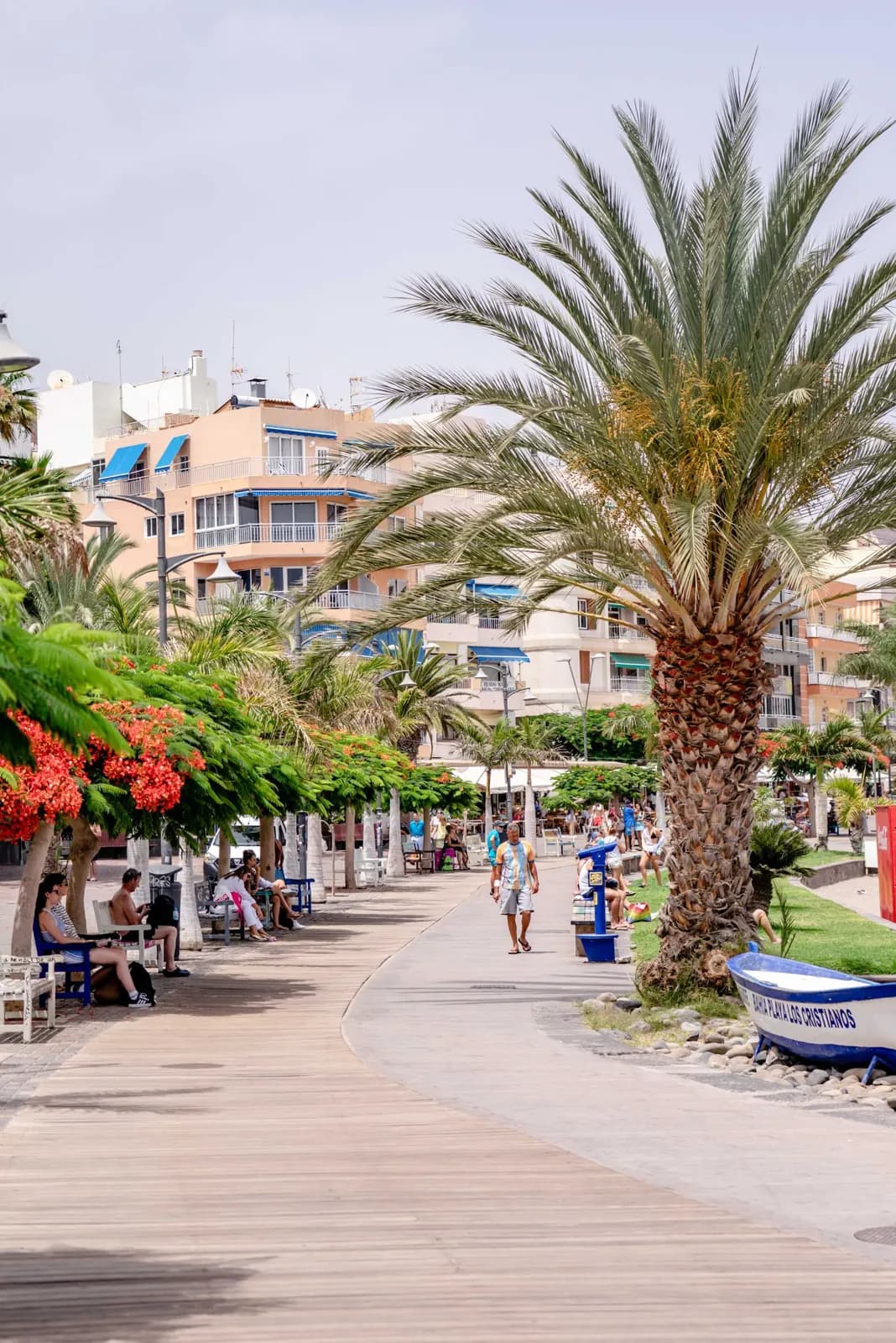
Yes: from November to March the south coast averages 21.7–24.8 °C by day and 15.0–18.2 °C at night, with fewer than four rain days a month. That is why Tenerife is the classic winter-sun choice from the UK and Ireland.
Can you sunbathe and swim in winter?
You can sunbathe on most winter days in the south, which averages 193–226 hours of sunshine a month from November to March. The sea is at its coolest in February and March, around 19 °C, which most people find fresh but swimmable; heated pools make a real difference for children at this time of year.
Evenings are the catch. With night-time lows around 15 °C in January and February, pack a light jumper for dinner on a terrace, and a proper warm layer if you plan to go up the mountain.
December and January
December is the wettest month on the south coast, and it still averages only 3.5 rain days, with 22.8 °C highs. In the north, December has 8.8 rain days at the airport, so a sunny base in the south is the safer bet over Christmas and New Year.
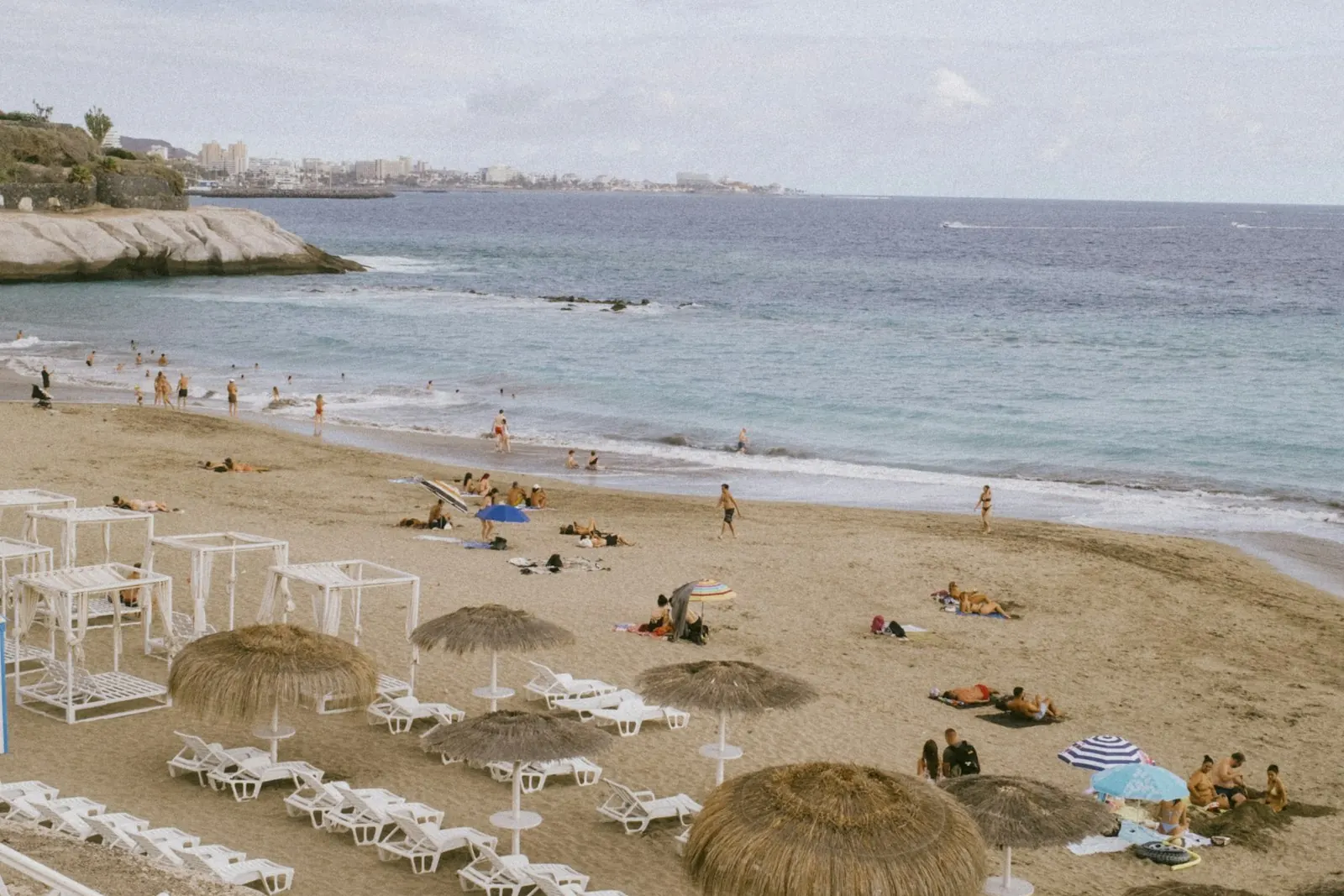
Area
Costa Adeje
1 stay · from €420 per night
Spring, summer and autumn in Tenerife
Spring (April–May) is the driest and one of the most pleasant times on the island, with south-coast highs of 23–24 °C and fewer than 1.2 rain days a month.
- Summer (June–August): the south reaches 25.4–28.4 °C and rain is practically absent. July has 295 hours of sunshine at Tenerife South airport, the most of any month.
- Autumn (September–October): the air is still 26.8–27.9 °C by day and the sea reaches its yearly peak of around 24 °C. From October the north starts to turn wetter again (6.5 rain days at the north airport), while the south stays dry.
- May and June are good for a first trip if you want to combine beach days with the north and Teide, because the whole island is dry and walking temperatures on the mountain are comfortable.
North or south: where is the weather better, month by month?
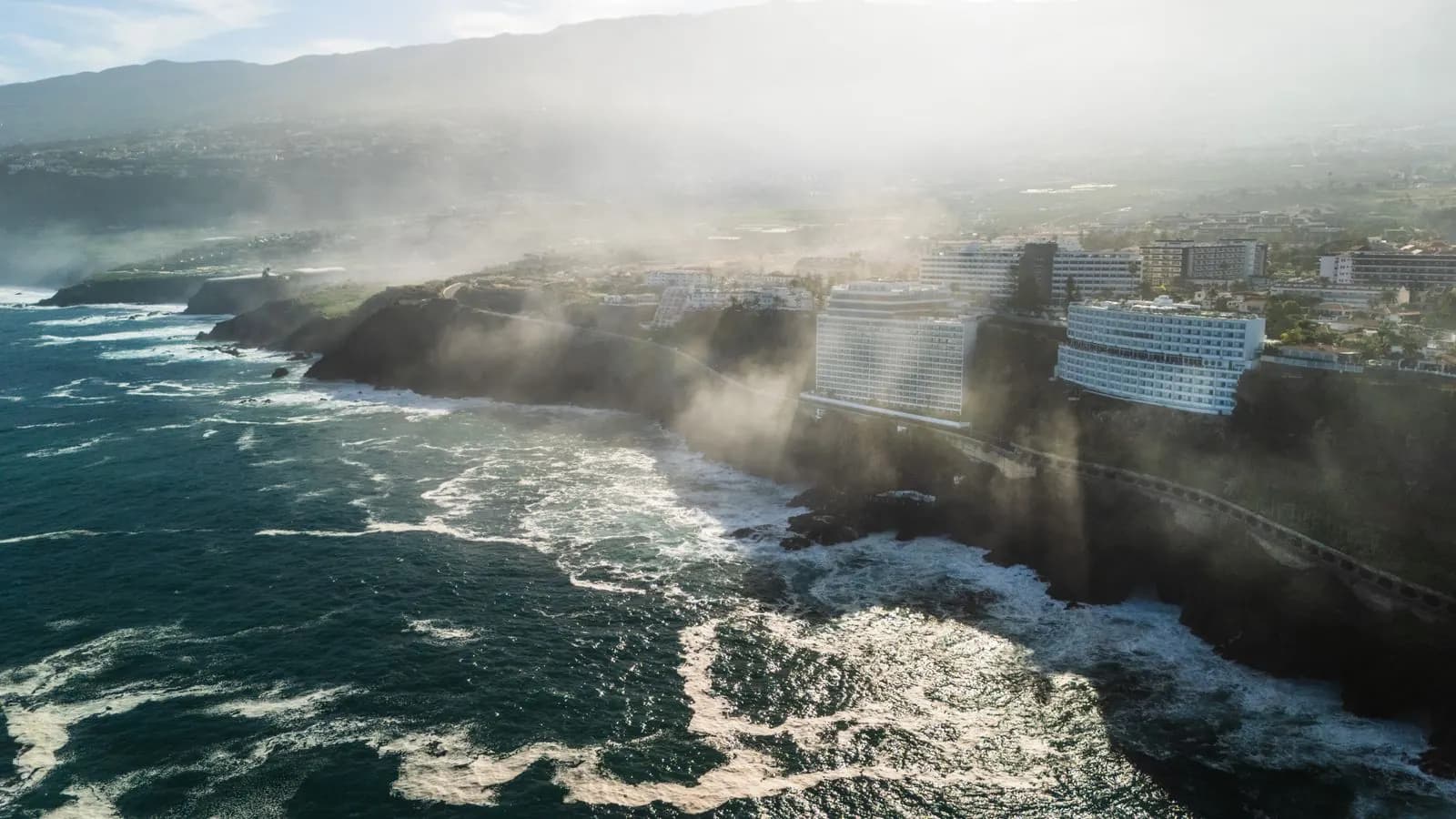
The south is drier in every month and sunnier in most, while the north is greener, cooler and cloudier, especially from October to April. The reason is the north-east trade winds: they push moist air against the mountains, forming the "sea of clouds" between about 600 and 1,800 m on the northern slopes, according to Tenerife's official tourism body.
| Months | South coast | North |
|---|---|---|
| November–March | Sunny, 21.7–24.8 °C highs, 1.8–3.5 rain days | Mild but changeable; 6.8–8.8 rain days at the north airport |
| April–June | Dry, 23–25 °C | Drying out; good for walking |
| July–September | Hot and dry, up to 28.4 °C | Warm and mostly dry, fresher than the south |
| October | Warm, 26.8 °C, dry | Rain returns (6.5 days) |
The north coast is milder than the airport figures suggest, because the north airport sits at 632 m. Tenerife's official tourism site describes the north coast as staying around 19–23 °C through the year. If you prefer the greener setting of Puerto de la Cruz, it works well in summer and for a mix of sightseeing and walking; for the most reliable beach weather in winter, choose the south.
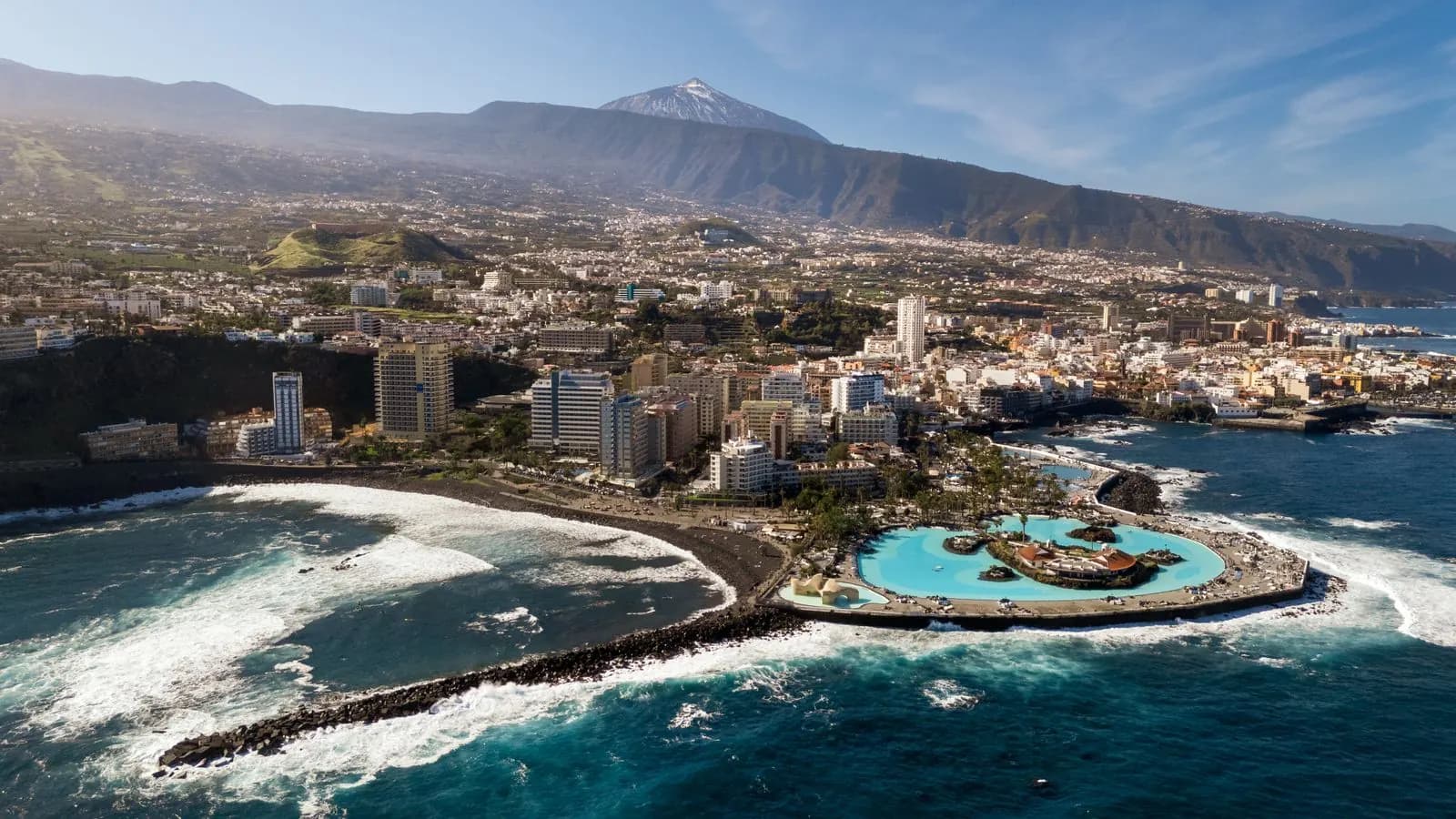
Area
Puerto de la Cruz
1 stay · from €150 per night
How cold is Teide, and when does it snow?
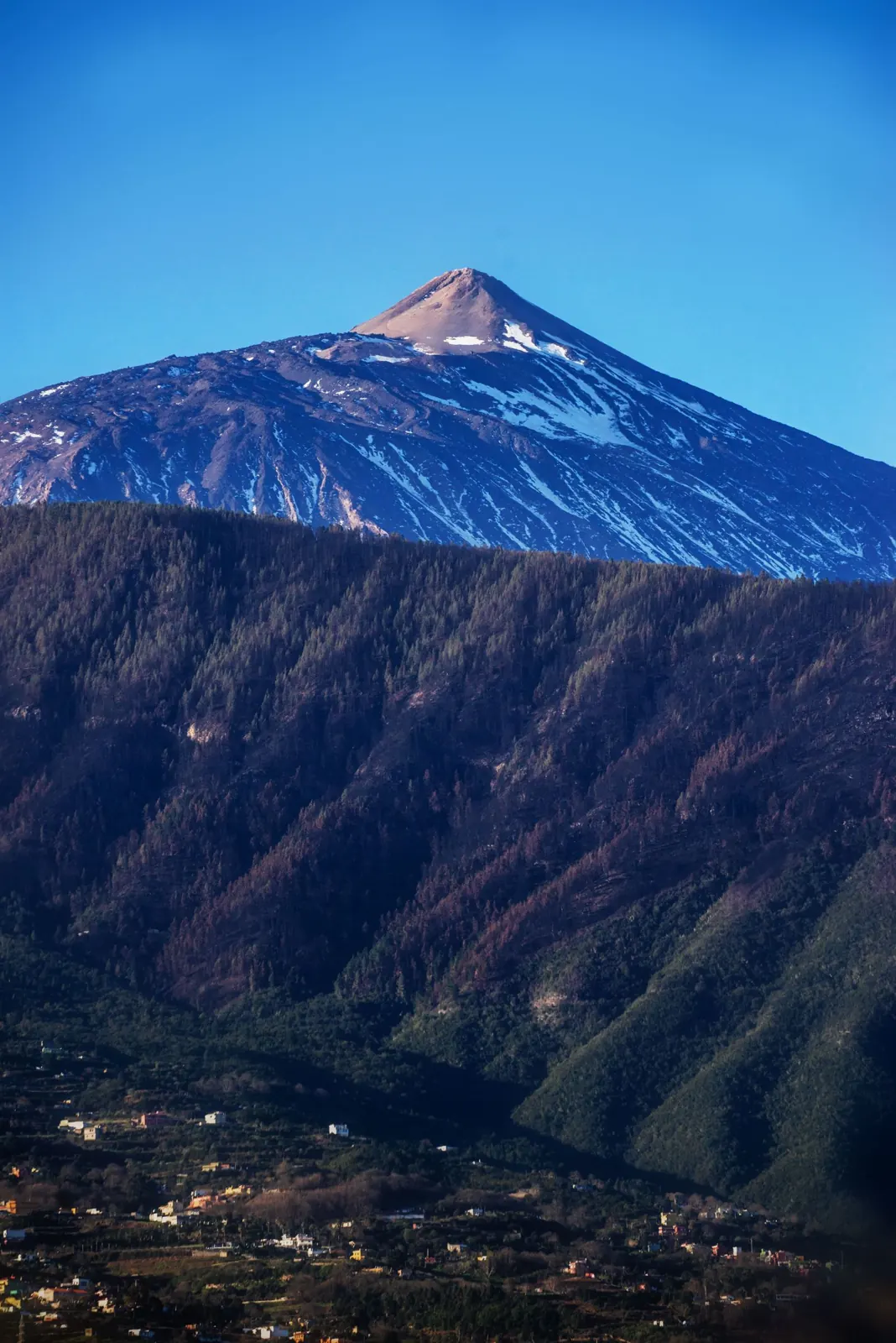
It is always much colder on Teide than on the coast: at Izaña (2,369 m) the average January high is 7.5 °C and the average low 1.1 °C, with around 12 frost days in that month. Snow falls on an average of 2.4 days in January, 2.5 in February, 2.1 in March and 1.6 in December, so winter visits can mean icy roads or closures; summer highs at Izaña are 22–23 °C.
Bring a warm jacket in any season if you are going up for sunset or stargazing, when temperatures drop quickly. For a day trip, a car gives you the freedom to choose a clear day and head up early.

Car rental
Volkswagen T-Roc or similar
from €46 per day
Calima, rain and wind: what to expect
Calima is haze caused by Saharan dust carried to the Canary Islands on easterly winds; it veils the sun, cuts visibility and can affect air quality for a few days. Most episodes are mild and simply make the sky milky, but strong ones do happen: on 22 February 2020 all Canary Islands airports closed, most until 24 February, with gusts up to 120 km/h and around 800 flights cancelled or diverted (NASA Earth Observatory).
We do not publish a figure for how many calima days to expect per month, because we could not find an official one. If a strong episode is forecast, check your flight status and follow the Canary Islands government's air-quality advice.
Rain is rarely a trip-spoiler in the south: Tenerife South airport records 132 mm a year, against 520 mm at the north airport.
Prices and crowds by month
Our own rates follow two high seasons, winter (December–April, the winter-sun season) and July–August, with lower rates in the months between. Those in-between months, May–June and September–October, also have some of the best weather of the year: dry and warm.
For holiday homes, the difference between seasons can be significant, so compare dates before you fix your flights. The live prices on our homes below update with the season you choose.
School holidays and events calendar 2026–27

The busiest weeks for UK and Irish visitors are the October and February half-terms, and in February 2027 the Santa Cruz carnival main week overlaps half-term.
| Dates | What | Who travels |
|---|---|---|
| 17 Oct – 2 Nov 2026 | French Toussaint holidays (all zones) | France |
| 26–30 Oct 2026 | Typical England and Wales October half-term; Ireland mid-term break | UK, Ireland |
| 19 Dec 2026 – 4 Jan 2027 | French Christmas holidays | France |
| 22 Dec 2026 – 5 Jan 2027 | Irish Christmas school holidays (schools close 22 Dec, reopen 6 Jan) | Ireland |
| 22 Jan 2027 | Santa Cruz carnival opening gala | Everyone |
| 6 Feb – 8 Mar 2027 | French winter holidays, staggered by zone | France |
| 15–19 Feb 2027 | Typical England February half-term; Irish post-primary mid-term | UK, Ireland |
| 19–28 Feb 2027 | Santa Cruz carnival main week (main parade Tuesday 23 Feb) | Everyone |
England's half-terms vary by council and academy, so check your school's dates before booking. If you want carnival, book a base early; if you want a quiet beach week, avoid the dates in this table.
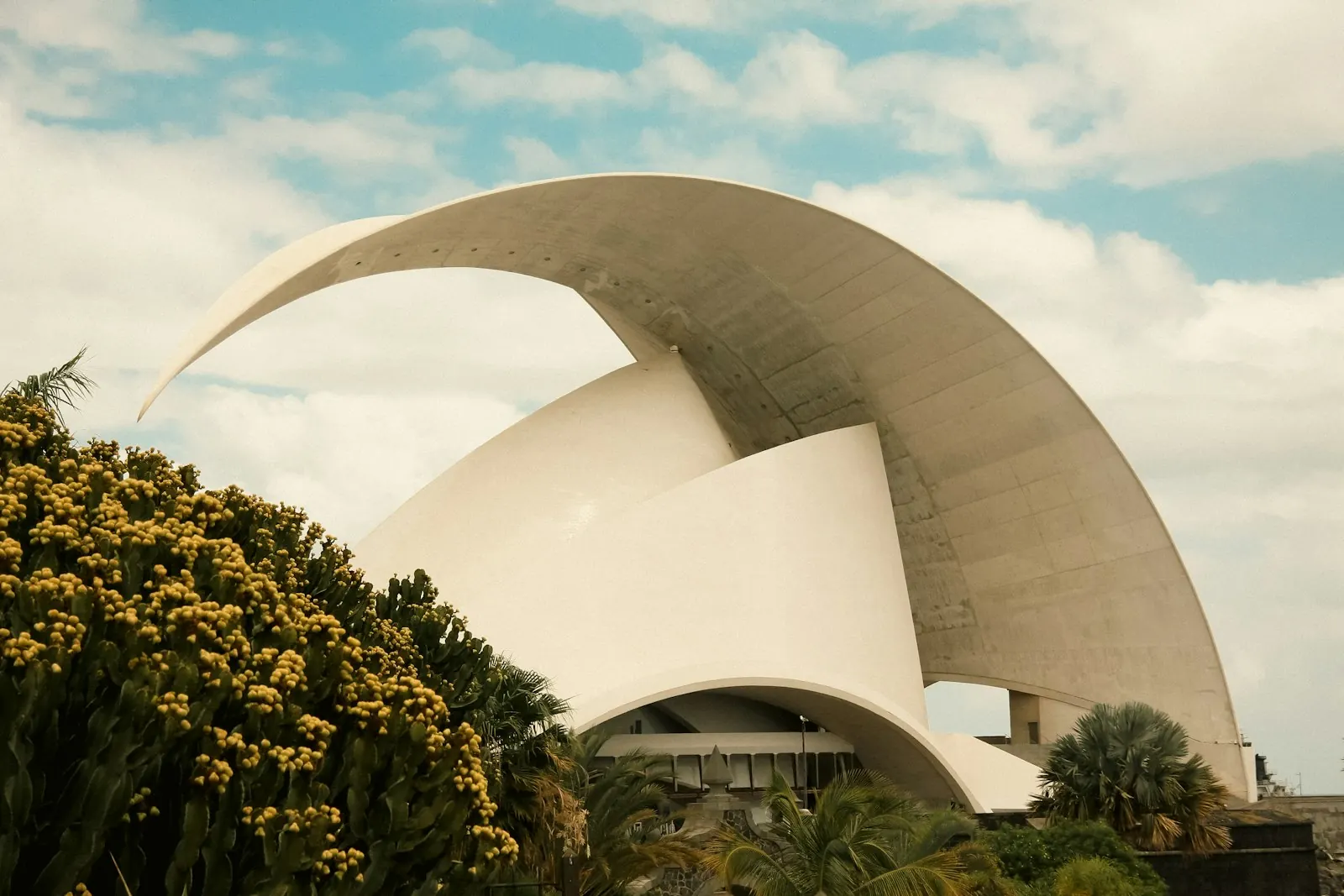
Area
Santa Cruz de Tenerife
1 stay · from €85 per night
FAQ
Frequently asked questions
Is Tenerife warm in December?
Yes. The south coast averages 22.8 °C by day and 16.5 °C at night in December (AEMET, Tenerife South airport). It is the south's wettest month, but that still means only about 3.5 days with rain.
Can you sunbathe in Tenerife in January?
On most days, yes, if you stay in the south. January averages 21.7 °C highs and 193 hours of sunshine at Tenerife South airport. Evenings are cooler, with lows around 15 °C, so bring a layer for after sunset.
Is the sea warm enough to swim in winter?
The sea is around 19–20 °C from January to April, the coolest of the year. Many people swim, but it feels fresh; a heated pool is worth having if you travel with young children.
What is the best month for hiking in Tenerife?
April to June is the best window for most walks: the north and the mountains are drying out, and snow on Teide averages under one day a month from April. Summer is fine at altitude but hot on exposed southern trails, so start early.
Is the north or south of Tenerife better in October?
The south: in October it averages 26.8 °C with 1.6 rain days, while the north airport records 6.5 rain days. The north is still pleasant for sightseeing, but expect showers and cloud.
What is the hottest month in Tenerife?
August, with 28.4 °C average highs at Tenerife South airport and 29.0 °C in Santa Cruz. September is almost as warm, at 27.9 °C, with a warmer sea.
When is the Tenerife carnival in 2027?
The Santa Cruz carnival opens with its gala on 22 January 2027, and the main street week runs from 19 to 28 February 2027. The main parade (coso) is on Tuesday 23 February.
Facts checked September 26, 2026